Hello, this is the sales manager from Gaolebo Cleanroom Gloves. Understanding cleanroom classification is essential when selecting equipment and consumables for controlled environments. In this guide, we explain ISO cleanroom classes from Class 1 to Class 9, helping you understand particle limits and practical applications.
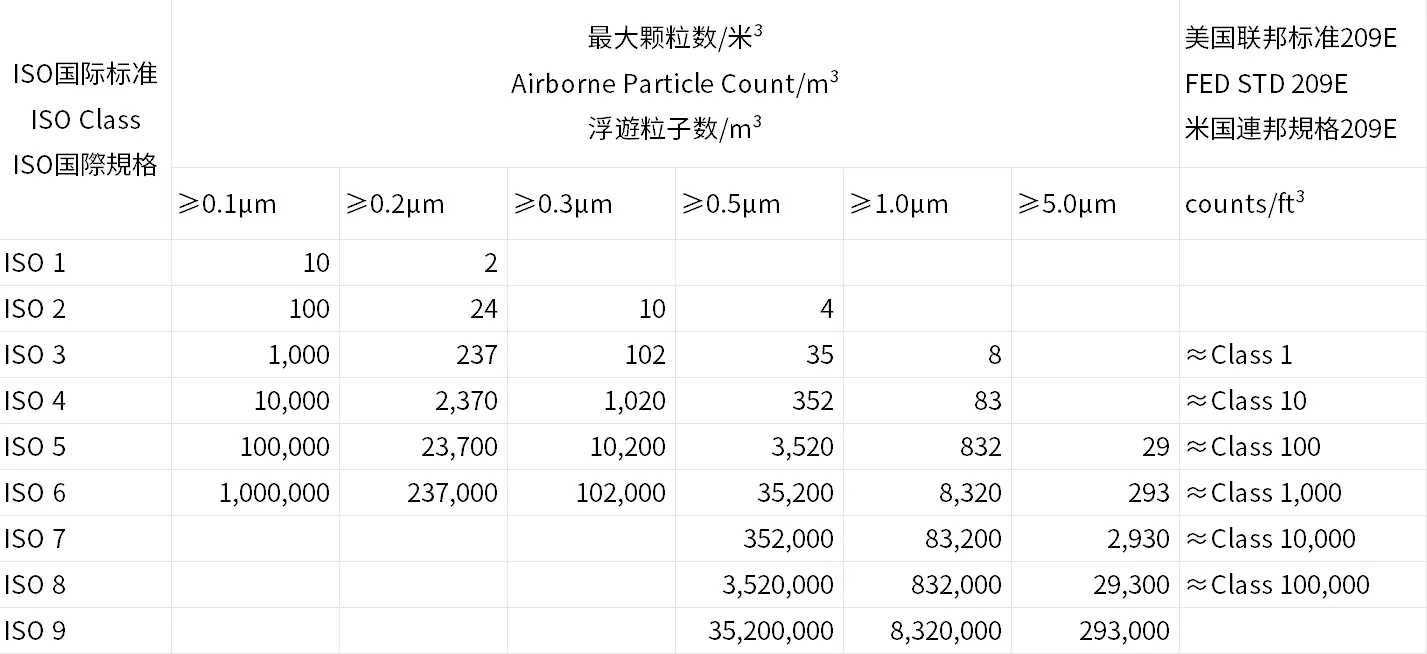
Cleanroom classification defines the level of air cleanliness based on the concentration of airborne particles. The classification system is standardized under ISO 14644-1, which specifies the maximum allowable particle counts for different cleanroom classes.
Lower ISO class numbers indicate cleaner environments with fewer particles.
Overview of ISO Cleanroom Classes (1–9)
ISO cleanroom classes range from Class 1 (the cleanest) to Class 9 (the least strict). The classification is based on particle concentration per cubic meter at specific particle sizes.
Typical reference particle size: 0.5 μm
General trend:
ISO Class 1–3 → Ultra-clean environments
ISO Class 4–6 → High-precision industries
ISO Class 7–9 → General controlled environments
Particle Count Limits by ISO Class
Each ISO class defines the maximum allowable particle concentration. For example:
ISO Class 5 → approximately Class 100
ISO Class 6 → approximately Class 1000
ISO Class 7 → approximately Class 10,000
As the class number increases, the allowable particle count also increases.
ISO Class 5 cleanrooms have stricter particle limits than ISO Class 6. For example, at 0.5 μm, ISO Class 5 allows significantly fewer particles per cubic meter. This makes ISO Class 5 suitable for more sensitive processes such as semiconductor manufacturing and pharmaceutical filling.
Cleanroom classification is determined by measuring airborne particle concentrations using particle counters. Measurements are taken at specific particle sizes (such as 0.5 μm) and compared against ISO 14644-1 limits to determine the cleanroom class.
Not necessarily. Higher cleanroom classes (such as ISO Class 5 or lower) provide cleaner environments, but they also require higher costs and stricter control. The best choice depends on the specific application and contamination sensitivity.
Conclusion
Cleanroom classification provides a standardized way to define air cleanliness levels. By understanding ISO Class 1–9, you can select the appropriate environment and consumables for your application, ensuring effective contamination control.
If you are looking for high-quality gloves designed specifically for semiconductor and electronics manufacturing environments, you can explore our cleanroom seamless gloves designed for ISO Class 5 and Class 6 cleanrooms.